Branding vs Marketing: What’s the Difference and Why It Matters for Business Growth
In the fast-paced world of business, the terms “branding vs marketing” are often used interchangeably. However, confusing these two powerful concepts can limit your company’s potential. Understanding the fundamental difference between branding and marketing is not an academic exercise—it’s a strategic imperative for sustainable growth. This definitive guide will clarify their distinct roles, show how they interlink, and provide a blueprint for leveraging both to build a resilient, profitable business.
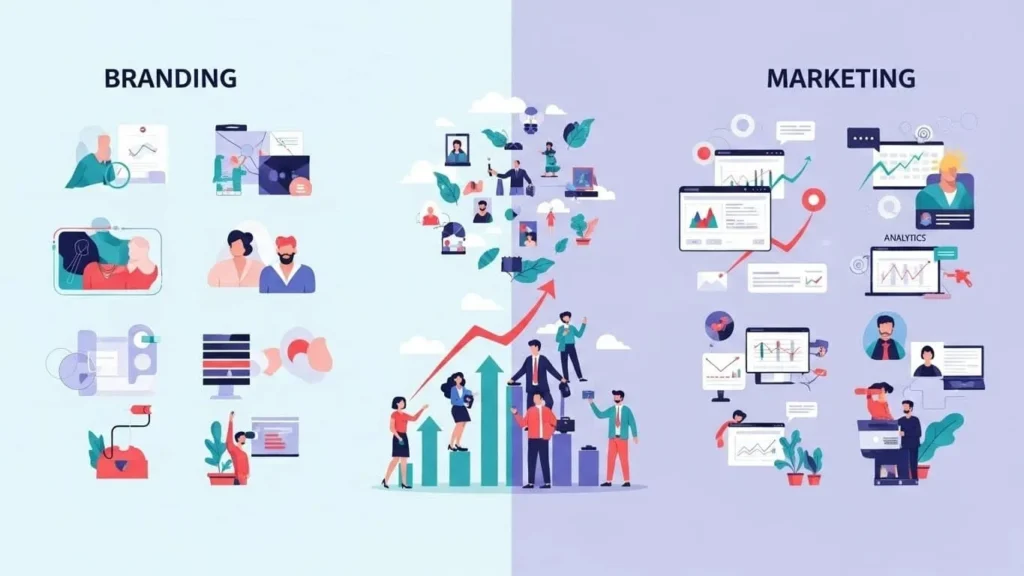
Branding vs Marketing: Defining the Core Concepts
Before diving into strategies, let’s establish clear definitions. Think of your business as a house. Branding is the foundation and the blueprint—it defines who you are, your purpose, and your promise. Marketing is the set of tools and activities—like the hammer, nails, and campaigns—used to build that house and invite people inside.
What is Branding? Your Business’s Heart and Soul
Branding is the strategic process of shaping your company’s identity, personality, and perception in the minds of your audience. It’s the “why” behind your business.
- Core Elements: Mission, vision, values, brand voice, visual identity (logo, colors, typography), and customer experience.
- Primary Goal: To build long-term loyalty, trust, and emotional connection. It answers the question: “What do people feel and believe about my company?”
- Mindset: Inward-looking and foundational. It’s about being.
What is Marketing? Your Growth and Communication Engine
Marketing encompasses the tactical activities and channels you use to promote your products or services, communicate your brand’s value, and drive immediate action.
- Core Elements: Advertising campaigns, social media posts, email newsletters, SEO, content marketing, PR, and sales promotions.
- Primary Goal: To generate leads, drive sales, and increase market share within a specific timeframe. It answers the question: “How do we get people to notice and buy?”
- Mindset: Outward-looking and tactical. It’s about doing and selling.
The Strategic Showdown: Brand Strategy vs Marketing Strategy
This is where the distinction becomes critically operational. Your brand strategy is the master plan for developing and strengthening your brand. It’s a long-term commitment to positioning. For example, a brand strategy might commit to being “the most trusted and user-friendly home security solution for urban families.”
Your marketing strategy, however, is the plan for executing specific campaigns to achieve business objectives. It supports the brand strategy. Following our example, a marketing strategy would outline the quarterly campaigns—like a targeted Google Ads series for the keyword “apartment security systems” or a social media contest—to reach that urban family audience.
Key Takeaway: Your marketing strategy should always be a megaphone for your brand strategy. Without the guiding light of a brand strategy, marketing tactics can become inconsistent, confusing, and ultimately ineffective.
Why Branding is the Bedrock: The Role of Branding in Business Growth
Many small businesses prioritize immediate marketing wins over long-term brand building. This is understandable but can be a costly mistake. Here’s why branding is important in marketing and for overall growth:
- Builds Trust and Credibility: A strong, consistent brand is a signal of reliability. Would you rather buy from a faceless commodity or a company you know, like, and trust?
- Commands Premium Pricing: People pay more for brands they value. Apple is the canonical example of brand building enabling premium pricing far above production cost.
- Fosters Customer Loyalty: Marketing gets the first sale; branding earns the second, third, and tenth. Loyal customers have a higher lifetime value and act as brand advocates.
- Provides Clarity in a Noisy Market: A clear brand stands out. It gives all your marketing a consistent story to tell, making every dollar spent more efficient.
Consider how professional Local SEO Milwaukee efforts are far more powerful when they drive customers to a website with a strong, trustworthy local brand identity, not just a list of services.
Long-Term Branding vs Short-Term Marketing: A Symbiotic Relationship
The debate shouldn’t be branding or marketing: which is better. The real question is how to balance them. Think of it as long-term branding vs short-term marketing.
- Marketing is a sprint. It’s the promotional push for a new product launch, the Black Friday sale, or the PPC campaign. It delivers measurable, immediate ROI.
- Branding is a marathon. It’s the cumulative effect of every touchpoint over years. Its ROI is measured in reputation, market position, and customer equity.
Successful companies run marathons while winning sprints. A brilliant short-term marketing campaign can falter if the brand foundation is weak (e.g., confusing messaging). Conversely, the strongest brand needs tactical marketing to reach new audiences and drive revenue.
Integrating Brand Building with Marketing Campaigns
So, how do you make them work together? Your brand building efforts should inform every one of your marketing campaigns.
Actionable Integration Tip: Before launching any campaign, audit it against your brand guidelines. Does the ad copy use the approved brand voice? Do the visuals align with our identity? Does the offer reflect our brand values? This ensures every marketing effort reinforces the brand, creating a compound effect over time.
For a deeper dive into tactical frameworks, explore these comprehensive branding vs marketing strategies by Top Branding Altimeter.
Conclusion: Why Mastering Both Drives Unstoppable Growth
Branding vs marketing is not a choice; it’s a powerful partnership. Branding is your long-term promise, and marketing is how you communicate and deliver on that promise daily. Branding is about who you are; marketing is about how you spread the word.
For sustainable business growth, you must invest in both. Build an unshakable brand foundation that earns trust and loyalty. Then, deploy focused, creative marketing tactics to drive awareness and action. This symbiotic approach is what separates fleeting successes from legendary, enduring companies.
Ready to move from confusion to clarity and start building a brand that makes your marketing work harder? Discover how our tailored frameworks can help you harmonize your brand and marketing strategies. Explore expert services or deepen your knowledge in our detailed resource center to truly master the art of branding vs marketing.