
By MRS Local SEO · Last reviewed: October 31, 2026
A complete local SEO checklist has eight stages, worked in this order: confirm your business is eligible, complete your Google Business Profile, align your website, add structured data, make your business details consistent online, earn real reviews, build local prominence, and measure monthly. Each stage ends with a “done when” test, so you can verify the work instead of assuming it.
This guide is for owners and in-house marketers who manage their own Google Business Profile (formerly called Google My Business). Where a task needs a full walkthrough, such as profile setup, citation building or review campaigns, this guide covers what to do and what “done” looks like, and those topics deserve separate guides. If the basics are new, start with What Is Local SEO? A Complete Guide for Small Businesses.
How does Google decide who appears in local results?
Google says local results are mainly based on relevance, distance, and prominence. Relevance is how well your profile matches the search. Distance is how far you are from the searcher, or from the location they typed. Prominence is how well known you are, including how many sites link to you and how many reviews you have.
You cannot control where a searcher is standing. Google also states that there is no way to request or pay for a better local ranking, and it does not publish how much each factor weighs. Every item below improves something you can influence. None guarantees a Local Pack position.
Local SEO checklist at a glance
Work top to bottom, because earlier stages affect later ones. A review campaign is wasted if the profile behind it is ineligible.
| Stage | Key tasks | Done when |
|---|---|---|
| 1. Eligibility | Choose storefront, service-area or hybrid | Your model is accurate and policy-compliant |
| 2. Business Profile | Verify, complete every field | Details match real-world signage |
| 3. Website | Local keywords, service pages, indexing | Pages are indexed and match your profile |
| 4. Structured data | Add LocalBusiness markup | Test shows no critical errors |
| 5. Consistency | Audit listings and fix conflicts | Name, phone and hours match everywhere |
| 6. Reviews | Ask everyone, reply, no incentives | A repeatable process exists |
| 7. Prominence | Earn genuine local links and mentions | Real mentions exist beyond your own site |
| 8. Measurement | Track calls, directions, leads | A monthly review is scheduled |
For a local SEO checklist template, copy this table into a spreadsheet and add owner and date columns. For a local SEO checklist PDF, use your browser’s print-to-PDF on this page.
The local SEO checklist, step by step
1. Confirm eligibility and choose your business model
Google’s guidelines for representing your business allow a profile for a business with a location customers can visit, or one that travels to customers. A virtual office or remote mailbox is not eligible. A service-area business should hide its address and list the areas it serves. A hybrid business, such as a garage that also offers roadside service, can show its address and a service area. Google says a shown location should be staffed and able to receive customers during stated hours. It also says a service area should generally not extend beyond about two hours of driving time.
Hypothetical example: A mobile dog groomer working from home hides the home address and lists the towns actually served.
Done when: you can state your model in one sentence, and what Google shows (address or service area) matches reality. Never use a fake or borrowed address to appear in a city where you have no presence.
2. Claim, verify and complete your Google Business Profile
Verification tells Google you are authorized to represent the business, and Google says complete, accurate information makes a profile more likely to appear. Per the guidelines:
- Use your real-world business name, with no keywords or taglines.
- Choose the fewest categories that describe your core business.
- Keep one profile per business.
- Add hours, a phone number you control, photos, and a description without links or promotional pricing.
Done when: it is verified, every applicable field is filled, and the name, hours and categories match your signage and website.
3. Align your website with your profile
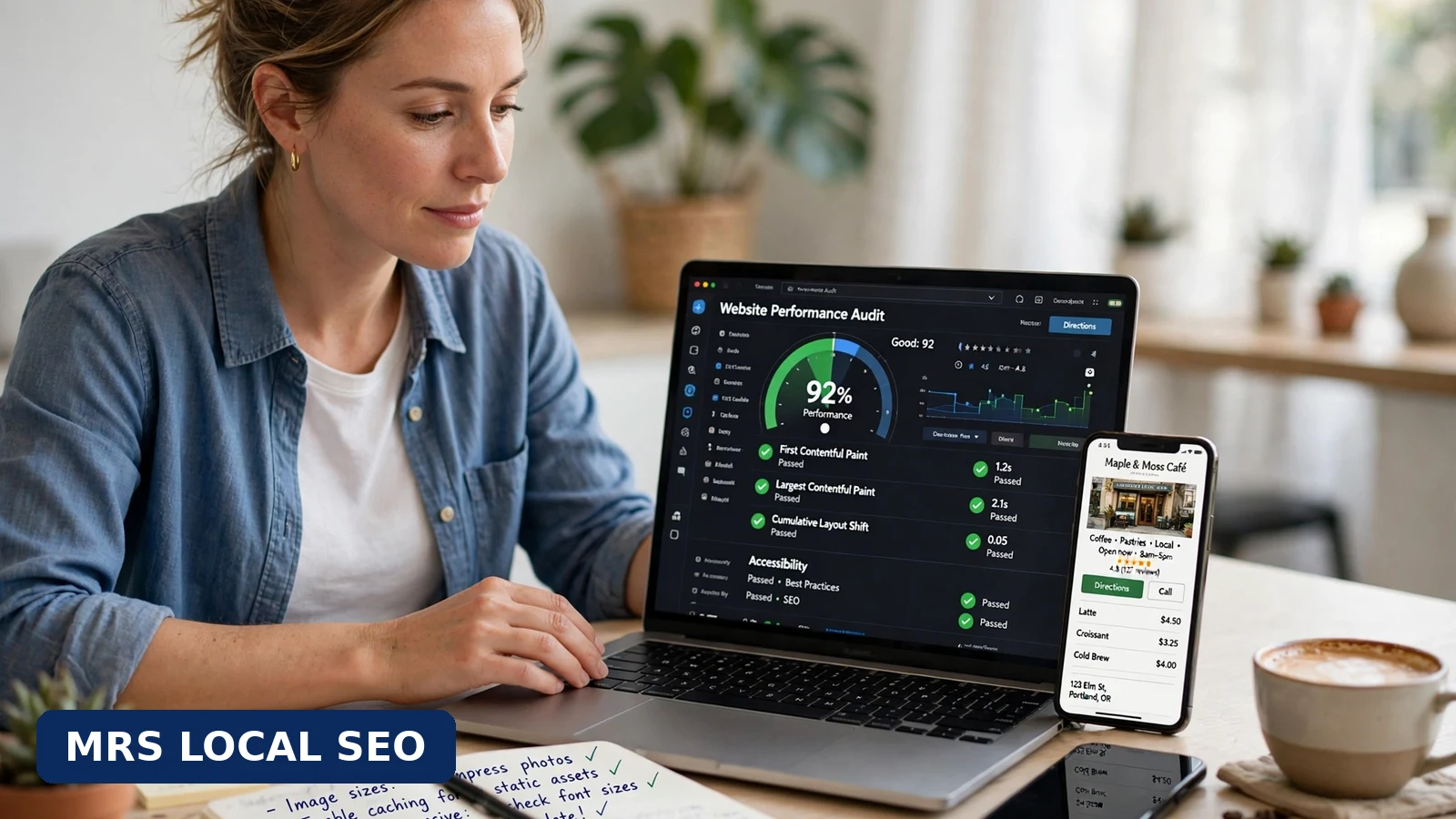
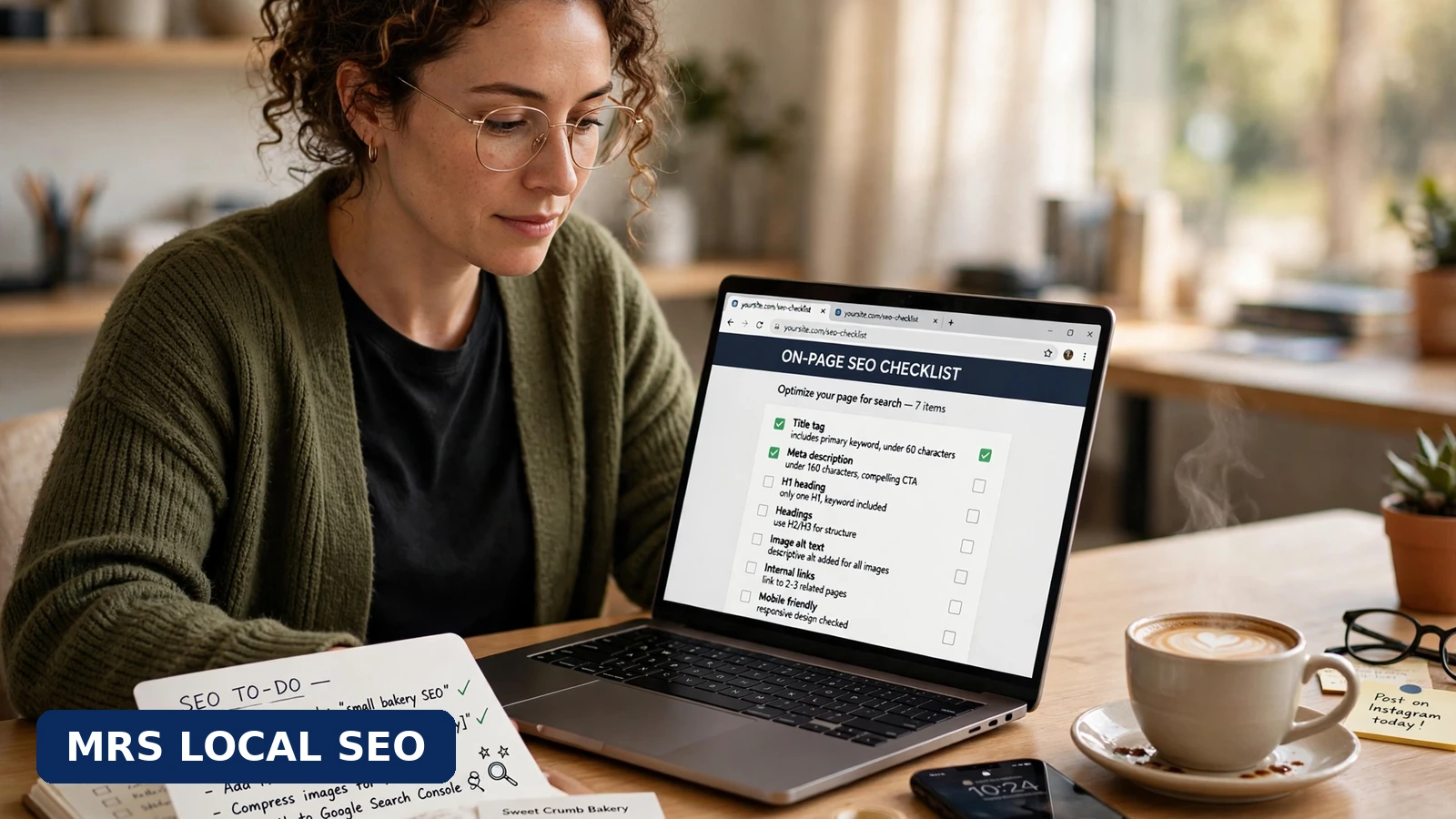
Choose local keywords by pairing each core service with a place you genuinely serve, then check Google Search Console for the queries you already appear for. Give each core service its own page, and show your business name, phone number and service area in text, not only in images. Don’t publish near-duplicate pages for towns you don’t serve. Google says a page must be indexed and eligible to appear with a snippet, and that indexing is never guaranteed. For how local differs from general SEO, see Local SEO vs Traditional SEO.
Done when: key pages are indexed (check with the URL Inspection tool), load usably on a phone, and show details identical to your profile.
4. Add structured data
Google’s LocalBusiness documentation explains how markup can describe hours, departments and more. Google’s business details guide also recommends Organization markup for your logo. Keep markup consistent with the visible page. Google says no special schema is needed for AI features, and markup does not promise a ranking gain. If you hide your address on your profile, think twice about publishing it in markup (professional opinion).
Done when: Google’s Rich Results Test shows no critical errors, and the values match the visible page.
5. Make your business details consistent online
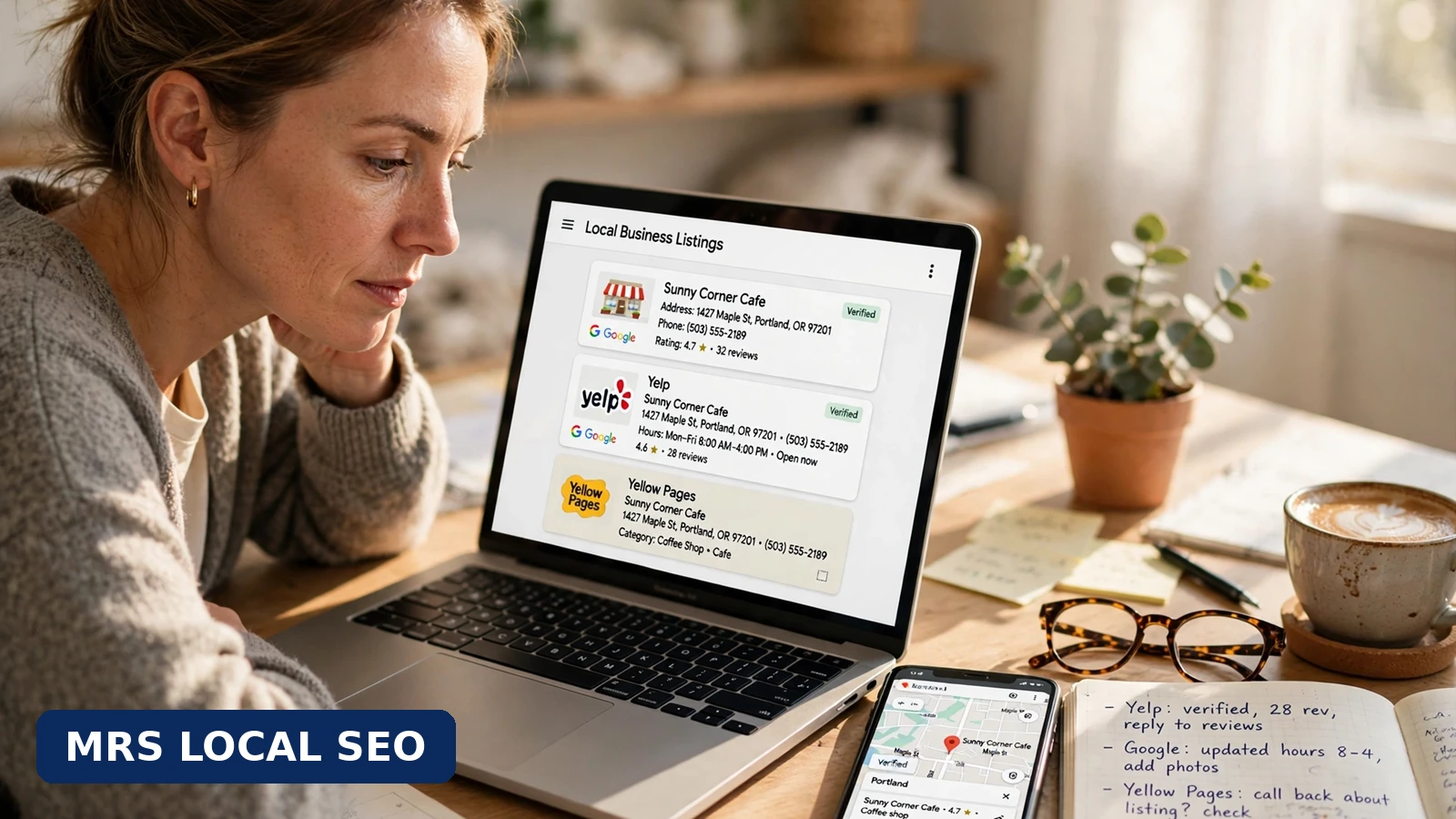
Google compiles business information from crawled web content, licensed third-party data and user contributions. Conflicting listings can therefore surface. Audit your name, address (or service area), phone and hours on major directories and industry sites. Fix wrong or duplicate entries and log what you find. In-depth citation building is a separate project.
Done when: your core details are identical across your top listings, and old phone numbers or addresses are corrected.
6. Earn and manage reviews
Google’s review guidance recommends asking customers to use a Google link or QR code, and replying to reviews. Offering free or discounted goods or services in exchange for posting, changing or removing a review is prohibited. My recommendation is to ask every customer the same way, rather than only those you expect to be happy.
Done when: a written request step exists after each job, no incentives are used, and recent reviews have short, specific replies.
7. Build prominence beyond reviews
Google lists links from other websites as part of prominence. Pursue genuine local mentions: your chamber of commerce, suppliers, sponsored events, local press. Avoid bought links and fabricated mentions.
Done when: you hold a list of real local organizations, and some have linked to or mentioned you.
8. Measure and maintain
Verify your site in Search Console and review your Business Profile performance insights. Track calls, direction requests and form leads, not only rankings. Monthly, update holiday hours, add photos, answer reviews and look for duplicate profiles or suggested edits.
Done when: you have a recorded baseline and a recurring monthly review.
What this checklist cannot tell you
Rankings are not revenue. A top Local Pack position that brings no calls is not success, so judge results by customer actions.
Official guidance beats opinion. Google’s documentation covers eligibility, ranking factors and review rules. Many checklists online mix those with unofficial ranking-factor lists. Google also publishes guidance on third-party SEO tools and advice. Treat anything unsourced as opinion, including parts of this article marked as such.
AI features add no separate checklist. Google says no additional requirements or special optimizations are needed to appear in AI Overviews or AI Mode. Helpful, accurate, people-first content and sound technical basics still apply, as described in Google’s helpful content guidance.
Frequently Asked Questions
What is a local SEO checklist?
A local SEO checklist is an ordered list of tasks that helps a business appear in local search results, including Google Maps and the Local Pack. It covers eligibility, your Google Business Profile, your website, consistent listings, reviews and measurement. Its value is turning a vague goal into verifiable steps.
How long does local SEO work take to show results?
No one can promise a timeline, because Google publishes none. Google notes that recrawling can take anywhere from several days to several months, and that structured data changes may take about a week to appear. In practice, expect weeks to months, with competition and your starting point affecting the pace (professional opinion).
Can I do local SEO myself, or should I hire an expert?
Most owners can complete stages 1 through 6 themselves with a few hours a week. Hiring help makes sense if your profile is suspended, your listings are badly tangled, or you lack time. Google offers tips for working with third parties, including keeping ownership of your profile.
Can local SEO services improve my Google ranking?
They can help you complete the work above correctly, but they cannot buy or guarantee a ranking. Google says it has no way to pay for better local ranking. Be cautious of any provider who promises a specific position or timeline.
Conclusion
A local SEO checklist works when each item has proof of completion. Confirm eligibility first, complete your profile, make your website and listings agree, earn reviews honestly, and measure customer actions every month. Finish stages 1 and 2 this week, then add one stage at a time.
If you’d rather have help working through this local seo checklist, the MRS Local SEO homepage outlines our local SEO services.