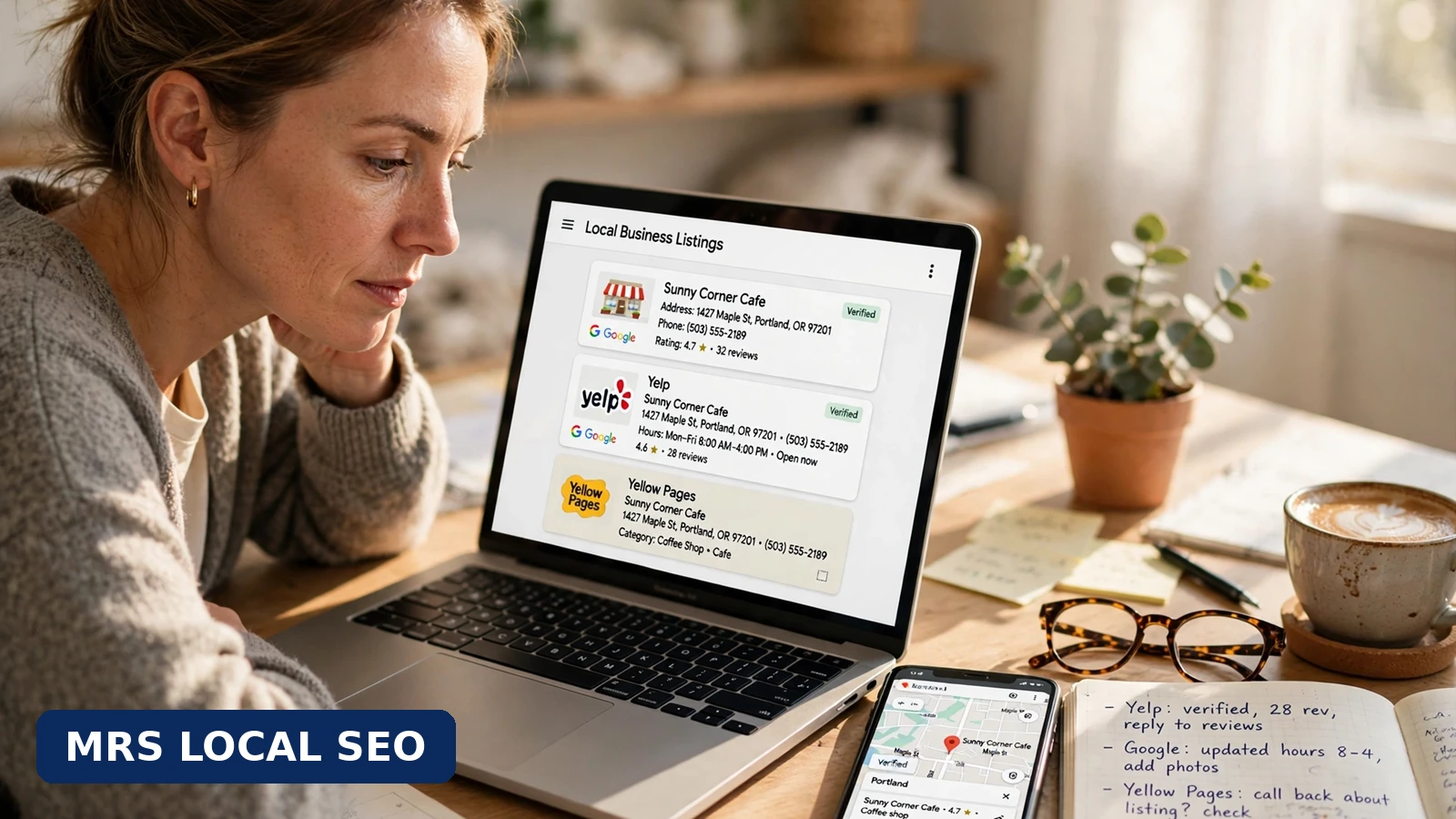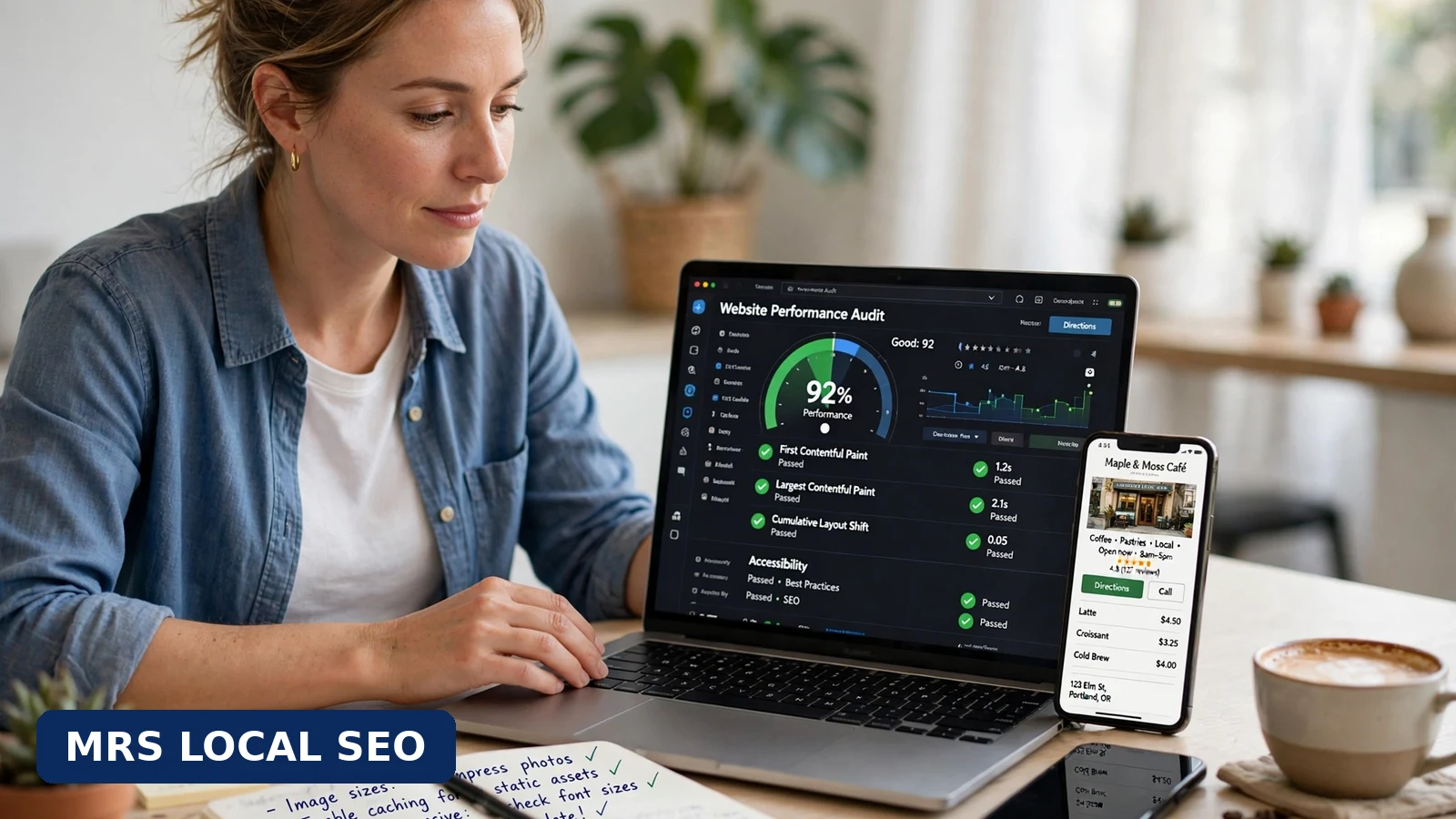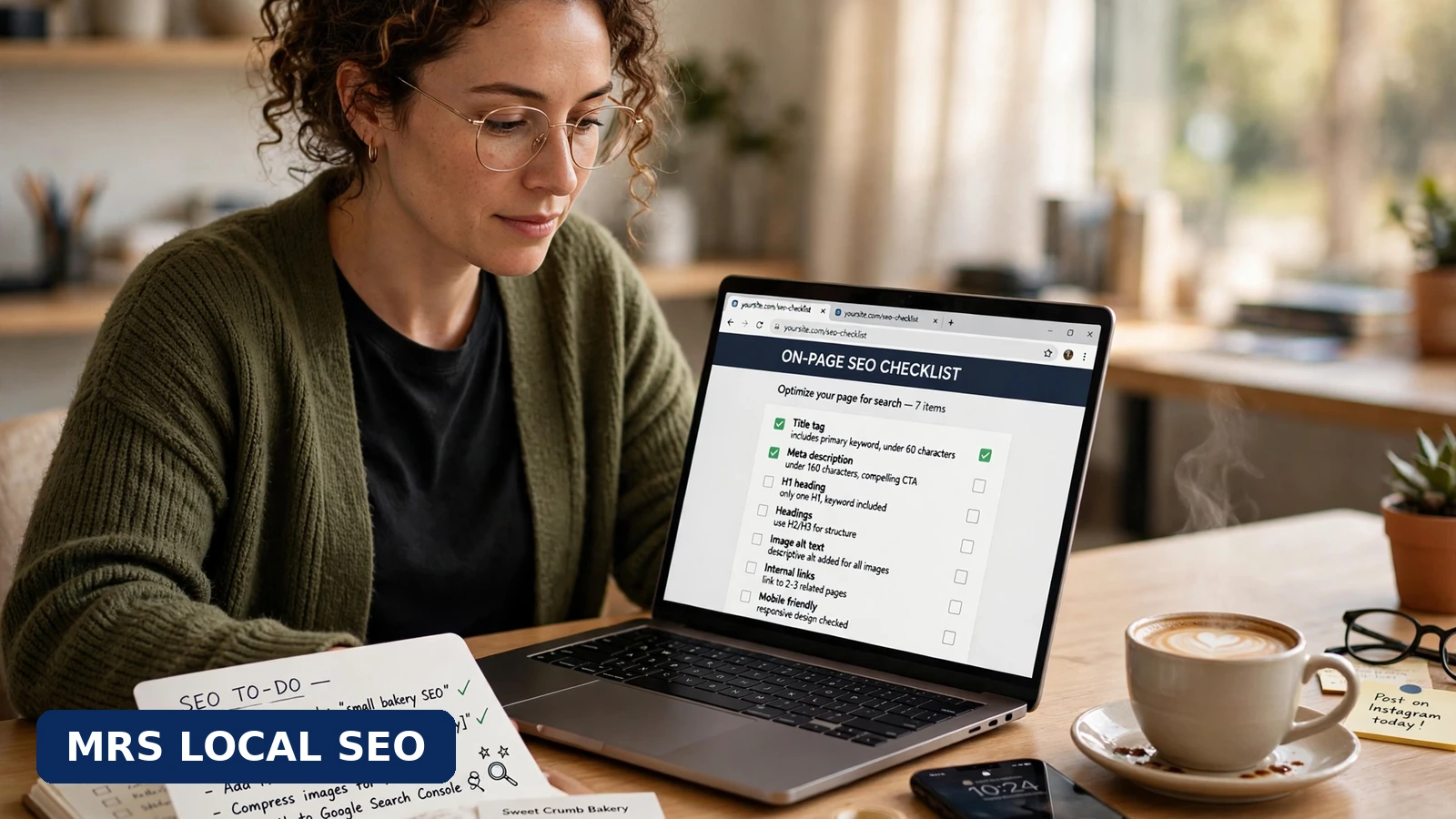


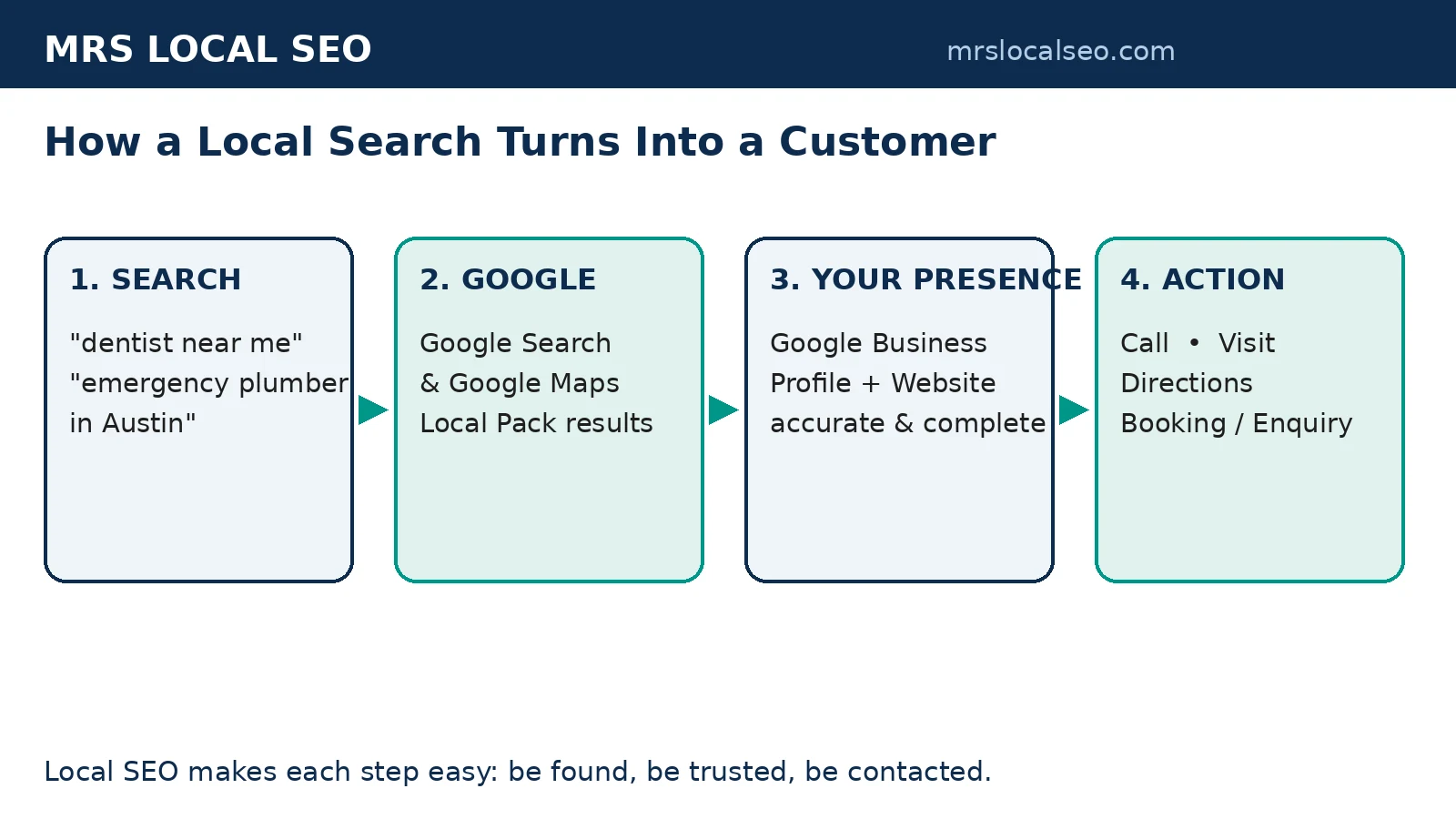
Customers rarely search for a local business by name. They type “dentist near me” or “emergency plumber in Austin” and choose from what appears. If your business serves a specific area, being visible in those moments matters.
Local SEO (local search engine optimization) is the practice of improving how a business appears in location-related searches, so people nearby can find accurate information and choose it. This guide explains how it works, what its main parts are, and how a small business can start without taking shortcuts.
What Is Local SEO?
Local SEO helps a business become more visible when someone searches for a product or service in a particular place, either by naming the place or by searching near their current location.
Depending on the search, that visibility can appear in three places:
- Google Maps, where businesses appear as pins and profiles.
- The Local Pack, the short list of businesses, usually with a map, shown above or among regular results.
- Ordinary organic results, such as your website pages.
Local SEO overlaps with traditional SEO, but adds business information, location signals and reviews. It improves your chances of being seen. It does not guarantee a ranking, website traffic, phone calls or revenue.
Short definition: Local SEO is the work of making a local business easy for search engines to understand and easy for nearby customers to find, trust and contact.
You may still see “Google My Business” used online. That is the former name of what is now called Google Business Profile.
How Does Local SEO Work?
When someone searches locally, Google tries to match the query with businesses that fit. Google states that local results are based primarily on relevance, distance and prominence:
- Relevance: how well a profile matches what the person is searching for. Complete, detailed business information helps Google understand what you offer.
- Distance: how far a business is from the location in the search, or from the searcher’s known location if none is given.
- Prominence: how well known a business is, based on information from across the web such as links, articles and directories. Google also says review count and score factor into local ranking, and that your position in web results matters.
Two cautions. First, you cannot control how far a searcher is from you, but you can make sure your address or service area is accurate. Second, these are Google’s published high-level considerations, not a complete formula. Many popular tactics are practitioner experience, not confirmed rules, and results vary by query and competition.
Why Is Local SEO Important for Small Businesses?
For businesses that depend on nearby customers, Local SEO can:
- make you easier to find for relevant searches in the areas you genuinely serve,
- help customers see correct hours, phone number, services and directions,
- support visits to your website, calls and direction requests,
- work alongside your other marketing.
Outcomes depend on your competition, category, location, demand and the quality of your work. No honest guide can promise identical results for every business.
What Are the Main Components of Local SEO?
You do not need every tactic. These are the building blocks.
Google Business Profile
Your Business Profile controls much of what appears in Maps and local results: name, categories, hours, services, photos and reviews. Before optimizing, check eligibility. Google’s representation guidelines say to use your real-world business details and a precise address or service area.
Website and on-page local SEO
Your site should clearly state what you do, where, and how to contact you. A plumber’s page about water-heater repair that names the neighborhoods actually served is more useful than a page with a city name repeated.
Local keyword research and search intent
Learn how customers describe your service and place: “emergency plumber,” “plumber near [suburb],” “drain cleaning cost.” Match each page to one clear intent.
Accurate business information and citations
A citation is a mention of your business details, often name, address and phone (NAP), on another site. Keep details consistent so customers and search engines are not confused by conflicting listings.
Reviews and reputation
Reviews help customers decide, and Google lists them among prominence signals. Ask real customers for honest feedback. Google’s review guidance says reviews must reflect a genuine experience and that incentives such as discounts in exchange for a review are prohibited.
Local links and community relationships
Mentions from local organizations, suppliers, sponsorships or local press can add credibility. Earn them through real relationships, not link purchases.
Location and service-area pages
If you serve several areas, a page for each can help only when it contains something real: services offered, local details, photos of actual work. Near-identical pages with the city name swapped help no one.
Service-area businesses. Serving an area is not the same as having a staffed, customer-facing location. Google’s guidelines say service-area businesses that travel to customers can have one service-area profile, and that virtual offices are not allowed unless staffed during business hours. Never invent an address to look closer.
Technical SEO and structured data
Make sure the site loads quickly on mobile and can be crawled. Structured data can help search engines understand a page, but it does not guarantee rich results.
How Can a Small Business Get Started With Local SEO?
- Confirm eligibility. Decide whether you are a storefront, a service-area or a hybrid business.
- Fix your core details. Name, address or service area, hours, phone and website should match reality.
- Complete your Business Profile. Choose accurate categories, list services, add real photos.
- Define what and where you serve. List the services and areas you truly cover.
- Improve key website pages. Make each service page clear, useful and easy to contact from.
- Align listings. Keep important directory details consistent with your profile.
- Build an honest review habit. Ask every satisfied customer, in the same way, with no incentives.
- Review and adjust. Check calls, direction requests and Search Console data, then improve based on what you observe.
Hypothetical example: A two-person electrical company works from home and visits customers. It sets a service area, hides its home address as Google’s guidelines allow for service-area businesses, rewrites its service pages and asks each customer for a review after a job. Rankings may or may not move quickly, but the business information is now accurate and easier to find.
Local SEO vs. Traditional SEO
| Local SEO | Traditional SEO | |
|---|---|---|
| Purpose | Be found by nearby customers | Be found by a wider, often non-local audience |
| Geographic focus | A city, area or “near me” | Often national or global |
| Search example | “dentist near me” | “how to whiten teeth” |
| Typical activities | Business Profile, reviews, citations, location content | Content, technical SEO, link building |
| Common visibility | Maps, Local Pack, organic | Organic results |
They overlap, since a good website helps both. For a deeper comparison, see Local SEO vs Traditional SEO: What’s the Difference?
Common Local SEO Mistakes
- Inaccurate information. Wrong hours or phone numbers cost customers. Fix them everywhere.
- Irrelevant categories. Choose the categories that describe what you actually do.
- Keyword stuffing. Write for people.
- Misleading location pages. Create them only for places you really serve.
- Fake or ineligible addresses. They risk profile problems and mislead customers.
- Buying, fabricating or incentivizing reviews. This is prohibited by Google’s policies.
- Ignoring website usability. A visible listing that leads to a slow, confusing page loses the customer.
- Expecting instant results. Local SEO is gradual.
- Treating third-party scores as Google factors. Tool metrics can be useful, but they are not Google’s rules.
How Long Does Local SEO Take to Show Results?
There is no guaranteed timeline. Three things happen at different speeds: you finish the tasks, search visibility may change, and measurable business results may follow. Changes depend on competition, category, location, your starting point and consistency. Judge progress by trends in impressions, calls and enquiries, not a single ranking.
Frequently Asked Questions About Local SEO
What is Local SEO in simple terms?
It is the work of helping a business show up when nearby people search for what it offers.
How does Local SEO help a small business?
It improves the chance that nearby customers find accurate information and can contact you. It cannot guarantee calls or sales.
Can I do Local SEO myself?
Yes, the basics (profile, accurate details, clear web pages, honest reviews) are manageable for a motivated owner. Competitive markets or many locations may justify help.
Is Google Business Profile part of Local SEO?
Yes. It is one important component, alongside your website, reviews and listings.
How does Local SEO affect Google rankings?
It works on local results such as Maps and the Local Pack, and also supports organic visibility. Google says web-result position is one factor in local ranking.
How long does Local SEO take to show results?
It varies, and no one can guarantee a timeline.
Conclusion
Local SEO is about making an eligible, accurate and useful local business easy to find. Start with correct information and a complete Business Profile, then improve your website and earn real reviews. If you would rather have specialists review your setup, you can explore Local SEO services from MRS Local SEO. Either way, begin with what you can verify today.