

A credible local SEO case study shows four things: the business’s starting position, the specific work done, the time period, and measurable customer actions such as calls and direction requests. A screenshot of a #1 ranking proves very little on its own.
This article does not present a real client result. The walkthrough below is an anonymised, hypothetical example. It shows how a local business typically moves toward the top of local search and Google Maps, and how to judge whether any case study, ours included, is credible and repeatable.
What Does a Local SEO Case Study Actually Prove?
A case study proves that a specific set of actions was followed by a specific change, for one business, in one market, over one period. It does not prove that the same actions will produce the same result for you.
Local search results depend on the searcher’s location, the competitors nearby, and the query. Google’s own guidance says local results are based primarily on relevance, distance, and prominence. Because distance is part of the equation, a business can rank first for a searcher on its own street and much lower for someone across town.
So a good case study answers questions, not just brags. What was the starting point? What changed? How long did it take? Could the result have come from something else, such as a seasonal spike or a competitor closing?
If you are new to the underlying concepts, our guide to what local SEO is covers the basics, and local SEO versus traditional SEO explains why local results work differently.
How to Read a Case Study: The Five Parts That Matter
Before trusting any local SEO case study, check that it contains these elements. Each one has a version that builds trust and a version that should make you cautious.
| Case-study element | What good evidence looks like | Red flag to watch for |
|---|---|---|
| Baseline | Starting calls, direction requests, and visibility recorded before work began | No “before” data at all |
| Actions taken | A specific, dated list of changes | Vague claims like “we optimized everything” |
| Timeline | Start and end dates, with results tracked month by month | A dramatic result with no time frame |
| Customer actions | Calls, direction requests, website clicks, and messages | Rankings screenshots as the only proof |
| Context and limits | Notes on seasonality, competitors, and other factors | Claims that the result is guaranteed or repeatable |
Source note: this table is our professional framework for evaluating case studies. It is not an official Google standard.
The baseline matters most. A result with no starting point proves nothing, however impressive the ending sounds.
An Illustrative Walkthrough: A Hypothetical Home-Services Business
Illustrative example only. The business below is invented for teaching purposes. It is not an MRS Local SEO client, and no figures, rankings, or timelines here represent a real result.
Imagine a small plumbing company that travels to customers’ homes and has no storefront. This is a service area business. The owner is frustrated because the same competitors keep appearing in the local pack, the map-based set of results Google shows for local searches.
Step 1: Record the baseline
Before changing anything, the owner records what is true today. That means calls, direction requests, website clicks, and messages from the Google Business Profile Performance report, plus the current local-pack position for a few core searches from a few nearby spots.
Google’s performance documentation describes these customer-action metrics. One caution: the calls metric counts clicks on the profile’s call button, not every phone call the business receives. A case study should say which one it is reporting.
Step 2: Confirm the profile is eligible and accurate
The next step is checking that the Google Business Profile follows Google’s rules. Google’s guidelines for representing your business say a service-area business should have one profile, with an accurate service area. A “virtual” office is not acceptable unless it is staffed during business hours.
For the plumber, that means:
- Choosing the most accurate primary category.
- Listing real services.
- Hiding the home address if customers never visit it.
- Setting a service area that reflects where the company genuinely works. Google’s guidelines indicate an area shouldn’t stretch much beyond roughly two hours of driving.
This is also where many businesses go wrong. Stuffing keywords into the business name or claiming an inflated service area may look like a shortcut, but it creates suspension risk.
Step 3: Make business details consistent everywhere
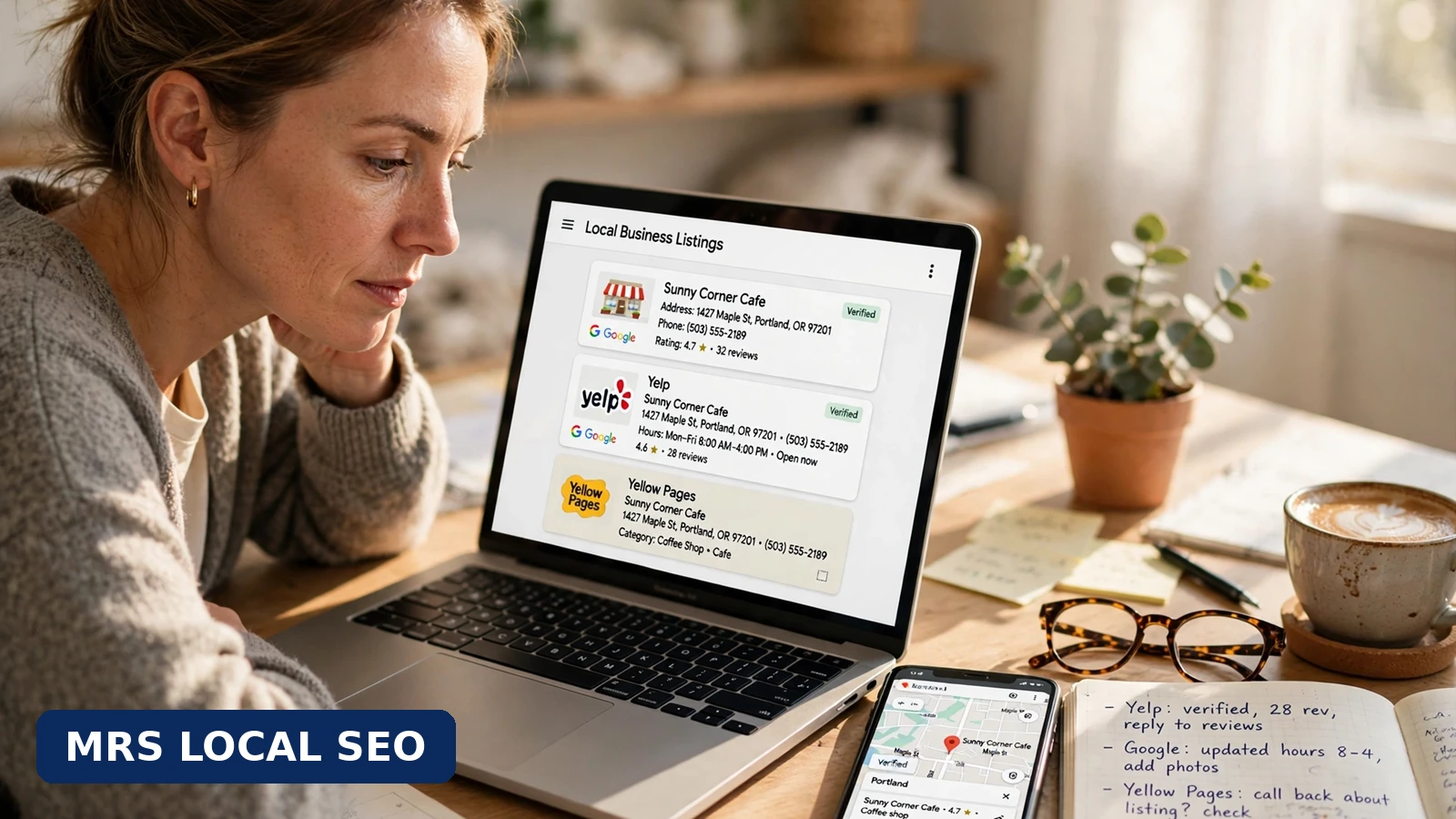
The company’s name, address or service area, and phone number should match across its website, its profile, and trusted directories. This is the work of NAP citations, and the purpose is to remove confusion. Conflicting details give Google less reason to trust the information it has.
Google says prominence draws on information from across the web, including links, articles, and directories. Citation consistency is therefore a reasonable foundation. It is not a magic switch, and Google does not publish how much any single signal weighs.
Step 4: Earn real reviews, steadily
Google states that review count and review score factor into local ranking. The safe approach is to ask real customers after real jobs and reply to every review, positive or negative.
Buying reviews, offering discounts or gifts in exchange for them, and writing them yourself or through staff violate Google’s policies. A case study that credits “a flood of reviews” should explain how those reviews were obtained.
Step 5: Strengthen the website’s local signals
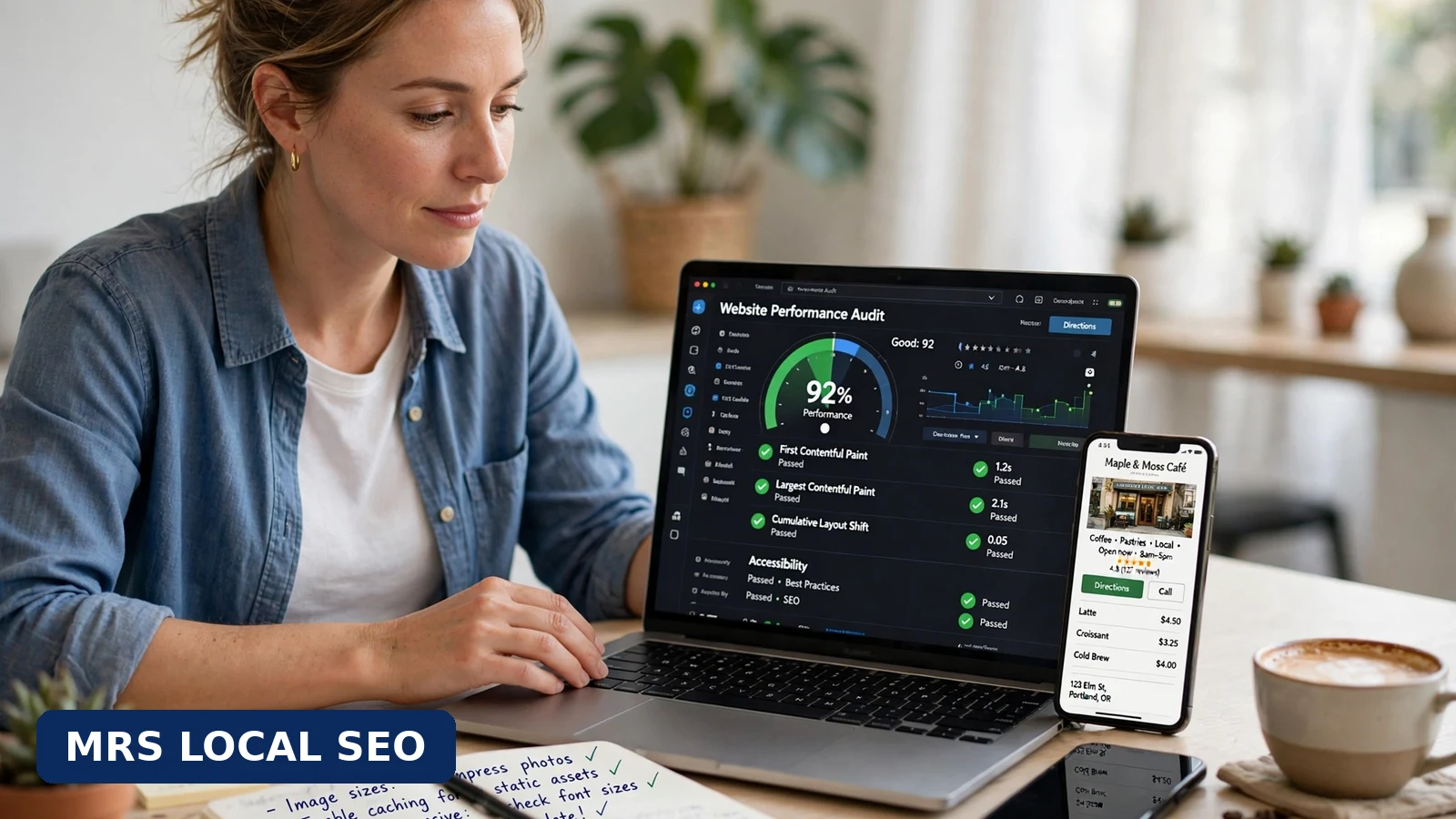
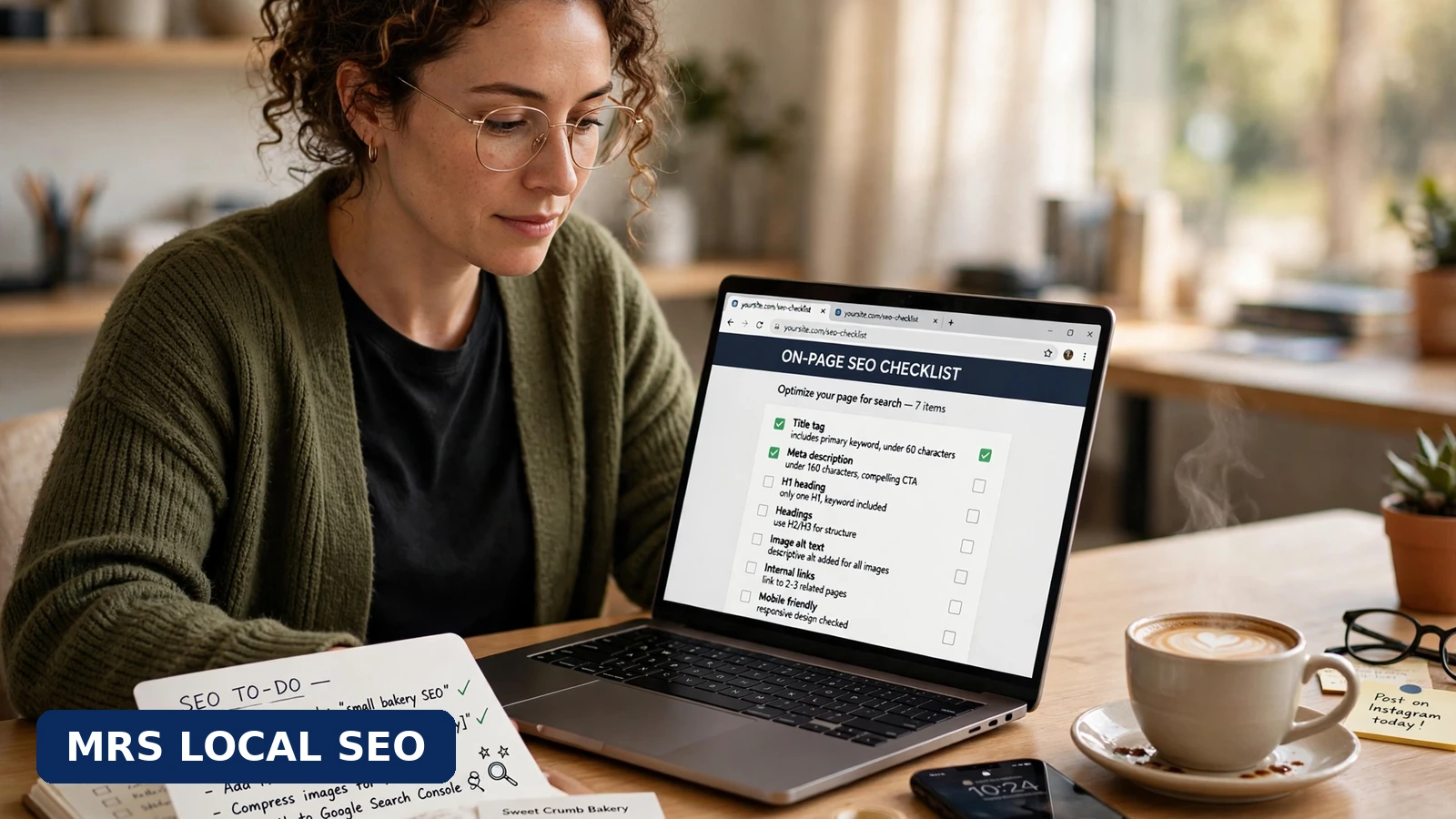
Google notes that your position in web results is also a factor in local ranking, so ordinary SEO best practices apply. For the plumber, that means a service page for each core service, a clear page about the areas served, and consistent contact details. Adding LocalBusiness schema markup can help search engines understand the business, but structured data supports understanding. It does not guarantee a ranking.
Step 6: Measure, then compare to the baseline
At the end of each month, the owner compares customer actions to the baseline, not just rankings. If the number of direction requests and call-button clicks rose while the work was in progress, that is encouraging. It is still correlation, not proof of cause.
Realistic Timeline: What to Measure Month by Month
Google does not publish a standard timeline for local results, so any specific promise should be treated with caution. As professional opinion rather than documented fact, a sensible measurement rhythm looks like this:
- Month 0: Record the baseline and fix eligibility problems.
- Month 1: Correct profile details, categories, and services. Check citation consistency.
- Months 2–3: Build a steady review routine and improve the website’s local pages.
- Months 3–6: Compare calls, direction requests, and website clicks to the baseline. Note seasonality.
- Ongoing: Keep information current. Local visibility reflects ongoing work, not a one-time project.
Results vary with competition and market size, and anyone promising a #1 position by a set date is guessing.
Why #1 in the Local Pack Isn’t the Same as #1 on Google
Ranking first in the local pack and ranking first in standard organic results are different achievements. They are measured separately and influenced by partly different signals. A business can lead the map results for one search and sit lower for another.
Rankings also change by searcher location. Two people searching the same phrase from different neighborhoods can see different top results. That is why customer actions are the stronger proof: a ranking is a position, while a call or a direction request is a person choosing to contact the business.
Shortcuts That Make Case Studies Unreliable
Be skeptical of any case study that depends on these tactics, because they put the business at risk:
- Fake or virtual locations. Listing an address where the business isn’t genuinely staffed and customer-facing violates Google’s guidelines.
- Incentivized or fake reviews. These can lead to removed reviews and restricted profiles.
- Inflated service areas. Claiming far more territory than the business actually covers misrepresents it.
- Business names with added keywords. Google expects the name to match real-world branding.
A genuine result built on policy-compliant work lasts longer than a spike built on a shortcut.
Frequently Asked Questions
What is a local SEO case study, and what should it prove?
A local SEO case study documents what was done to improve a business’s local search visibility and what changed afterward. A credible one shows the baseline, the specific actions, the time frame, and customer-action results. It should also be honest about what a single example cannot prove.
How long does local SEO work take to show results?
There is no official timeline, and results depend on competition, the starting condition of the profile, and the market. Many small businesses can reasonably expect to review meaningful movement over several months rather than days. Treat any fixed promise with caution.
Can I do local SEO myself or should I hire an expert?
You can handle the fundamentals yourself: claiming and verifying your Google Business Profile, keeping details accurate, requesting honest reviews, and tracking customer actions. Expert help makes more sense when you have multiple locations, a competitive market, a suspended profile, or limited time. Our local SEO checklist for 2026 can help you decide where you stand.
How does local SEO affect my Google ranking?
Local SEO mainly affects visibility in the local pack and Google Maps, where results are based primarily on relevance, distance, and prominence. It can also support your website’s performance in organic results, though the two are measured separately.
Does ranking #1 mean more customers?
Not automatically. A top position increases the chance of being seen, but calls, direction requests, and bookings are what show that people actually acted. Track those alongside rankings.
Conclusion
A local SEO case study is only as valuable as its evidence. The strongest ones show a recorded baseline, a clear list of policy-compliant actions, a realistic timeline, and customer actions rather than rankings alone. Be wary of anything that promises a guaranteed #1.
Your practical next step is to record your own baseline this week: your current calls, direction requests, and local-pack position for your most important searches. With that in hand, you can judge any case study, and any future result of your own, fairly. If you want to see how professional support fits into that process, read how local SEO services help small businesses get more customers, or visit the MRS Local SEO homepage to learn more about our approach to a local SEO case study and the services behind it.
Sources
- Google Business Profile Help, How to improve your local ranking on Google
- Google Business Profile Help, Guidelines for representing your business on Google
- Google Business Profile Help, Understand your Business Profile performance and insights